


U. D. C. Catechism
for Children
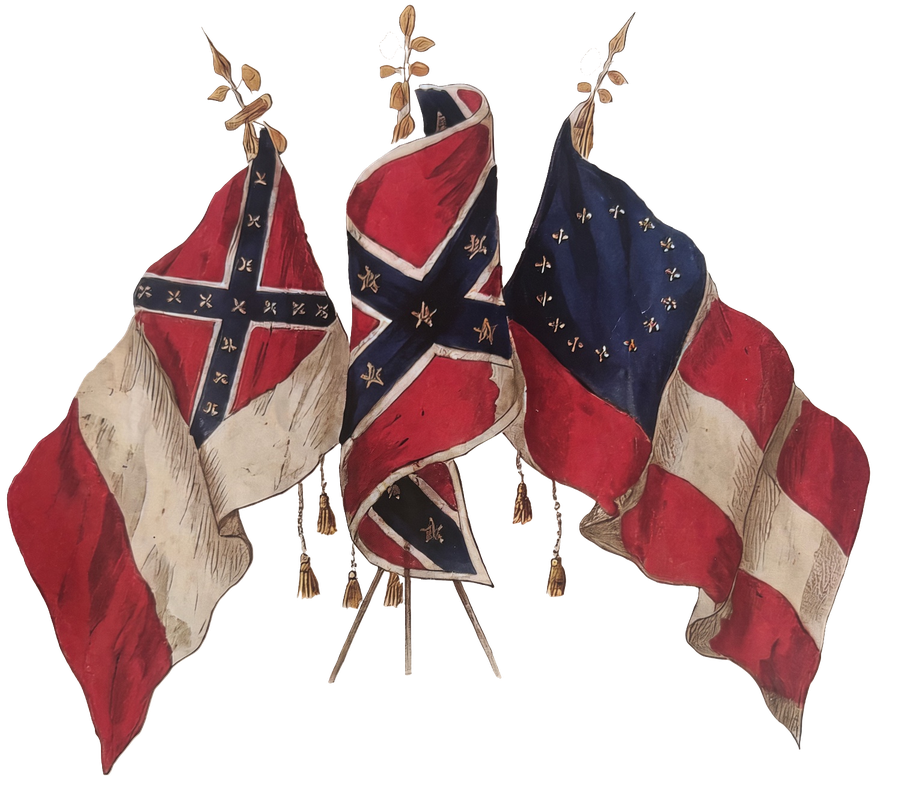
Arranged by Cornelia Branch Stone
Veuve Jefferson Davis Chapter No. 17 · United Daughters of the Confederacy
Originally published at Galveston, Texas, MCMIV
Reproduced by J.E.B. Stuart Camp 1343, MMXXVI
Preface
Sixty-four questions from Galveston
This little book is a modern treatment of the U. D. C. Catechism for Children, arranged in 1904 by Cornelia Branch Stone for the Veuve Jefferson Davis Chapter No. 17, United Daughters of the Confederacy, Galveston, Texas, and afterward reprinted by sister chapters for the instruction of the Children of the Confederacy.
It is offered in honor of those women who first gathered these questions and answers, and of the men and women of the South whose memory they sought to keep unstained. The text is Stone’s, as printed in the Staunton reprint issued about 1912 by the J.E.B. Stuart Chapter No. 10, U.D.C., and transcribed by Amy L. Heyse in 2006. Her spelling, capitals and dates are kept as printed; corrections of fact appear only as bracketed editor’s notes. No attempt has been made to rewrite her teaching.
The purpose is the same as that declared by the Daughters at their founding: to preserve the true history of the Confederacy, to keep in sacred memory the brave deeds of the men of the South, and to teach from generation to generation that there was no stain upon the action of their forefathers in the War between the States.
This modern reproduction was created by J.E.B. Stuart Camp 1343, Sons of Confederate Veterans, and it is hoped that it will serve that same work with a steady regard for the truth of Southern history.
MCMIV · Reproduced MMXXVI
Recitation
The sixty-four questions
Tap a question to reveal it.
A. The disregard, on the part of the States of the North, for the rights of the Southern or slave-holding States.
A. By the passage of laws in the Northern States annulling the rights of the people of the South—rights that were given to them by the Constitution of the United States.
A. The rights to regulate their own affairs and to hold slaves as property.
A. No; slavery was introduced into the country in colonial times by the political authorities of Great Britain, Spain, France and the Dutch merchants, and in 1776—at the time of the Declaration of Independence—slavery existed in all of the thirteen colonies.
A. All except one.
A. Yes, in most all; and our mother country, England, did not emancipate her slaves until 1843, when Parliament paid $200,000,000 to the owners.
A. By enterprising shipowners of New England, who imported the slaves from Africa and secretly sold their cargoes along the coast, after the States of the North had abolished slavery.
A. Because they found it unprofitable, and they sold their slaves to the States of the South.
A. Gen. U. S. Grant, who continued to live on their hire and service until the close of the war, and after the emancipation proclamation had been published, while he was leading armies to free the slaves of the South.
A. They organized a party to oppose slavery, called the “Abolition Party,” which advocated all means to abolish slavery, with no intention of paying the people of the South for their property.
A. At the election of Abraham Lincoln by this party, which was pledged to take away the slaves and offer no terms of payment to the owners.
A. No, not as a principle; and the colonies of Virginia and Georgia had strongly opposed its first introduction, but after the Constitution of the United States had recognized the slaves as property, and the wealth of the South was largely invested in negroes, they did not feel it was just to submit to wholesale robbery.
A. With great kindness and care in nearly all cases, a cruel master being rare, and lost the respect of his neighbors if he treated his slaves badly. Self interest would have prompted good treatment if a higher feeling of humanity had not.
A. They were faithful and devoted and were always ready and willing to serve them.
A. They nobly protected and cared for the wives of soldiers in the field, and widows without protectors; though often prompted by the enemies of the South to burn and plunder the homes of their masters, they were always true and loyal.
A. They believed that each State should regulate her own affairs, according to its best interests, with no meddling with the management of other States, and that each State should loyally support the Constitution of the United States.
A. John C. Calhoun, of South Carolina.
A. They seceded from the Union, and at once took possession of the forts, arms and ammunition within their borders.
A. In nearly all cases.
A. South Carolina, December 20, 1860.
Mississippi, January 9, 1861.
Florida, January 10, 1861.
Alabama, January 11, 1861.
Georgia, January 19, 1861.
Louisiana. January 26, 1861.
Texas, February 1, 1861.
Virginia, April 17, 1861.
Arkansas, May 6, 1861.
North Carolina, May 20, 1861.
Tennessee. June 24, 1861.
Missouri, October 31, 1861.
Kentucky, November 20, 1861.
A. Maryland.
A. The Maryland Legislature was closed by the United States marshal and the secession members were sent to prison on September 18, 1861.
A. Federal troops in passing through that city to invade the South, were attacked on April 19, 1861, by the citizens of Baltimore and a fight ensued in the streets, and the first blood of the war was there shed.
A. Yes, most valiant part, by furnishing many regiments of men and other aid for carrying on the war, and those who gave this aid endured persecution and imprisonment by the Federal authorities, as well as from those at home who opposed secession. Maryland was only kept in the Union by force.
A. In the last retreat of the world-famed fighting army of northern Virginia he appointed Col. H. Kyd Douglas and Col. Clement Sullivane, two staff officers, one twenty-four years of age, the other twenty-six, to command the rear guard of the two divisions of the little army on its way to Appomattox.
A. They proceeded to organize a government, by uniting themselves under the name of the Confederate States of America, and adopted a Constitution for their guidance.
A. Jefferson Davis, of Mississippi, senator from that State in the Congress of the United States, when Mississippi seceded, and already distinguished as a soldier and statesman, having gallantly served in the Mexican war, and as secretary of war under President Pierce, and member of both houses of Congress.
A. No. His State seceded on January 9th, and he remained in the Senate until January 21st, pleading for some pledge from the North that would secure the interests of the people of the South.
A. No; like General Lee, he was led by the people of his State, obeying their call, and believing that his first duty was to his State.
A. Alexander H. Stephens, of Georgia, eminent in his country’s history.
A. No; Mr. Davis was the first and only President, and there was no other Vice President than Mr. Stephens.
A. At Montgomery, Alabama, on February 4, 1861, and on the 9th of February Mr. Davis was unanimously elected President, and inaugurated on the 18th of February, in the Alabama State House, Montgomery was the first capital of the Confederacy.
A. Robert Toombs, of Georgia, secretary of state; Leroy P. Walker, of Alabama, secretary of war; Charles G. Memminger, of South Carolina, secretary of the treasury; Stephen H. Mallory, of Florida, secretary of the navy; Judah P. Benjamin, of Louisiana, attorney general, and John H. Reagan, of Texas, postmaster general. The last three named continued in the cabinet as long as the government lasted.
[Stone printed “Stephen H. Mallory”; the Confederate Secretary of the Navy was Stephen R. Mallory.]
A. To Richmond, Virginia, on May 6, 1861.
A. Yes; Congress, on March 6, 1861, passed an act adopting the first flag of the Confederacy, called the “stars and bars.”
A. Seven, as only that number of States had then seceded, but other stars were added as the other States came into the Confederacy until there were thirteen. There were three bars, two red and one white.
A. Because the “stars and bars” were mistaken, at the battle of Manassas for the flag of the United States, and it was unsafe to use it in battle.
A. General Beauregard, after the battle of Manassas, and his design was adopted by Congress as a battle flag and used throughout the war.
A. The cross of St. Andrew on a field of red, the cross blue, on which was thirteen stars.
A. This battle flag on a large field of white was adopted by Congress as the flag of the Confederacy, but it was found that so large an expanse of white might be mistaken for a flag of truce, and Congress ordered a band of red across the end of the white field.
A. No; it was adopted just before the fall of the Confederacy, and was never used.
A. The Confederate Veterans have for their emblem the battle flag, and the Sons of Veterans have adopted the last flag of the Confederacy, while the Daughters of the Confederacy use the “stars and bars,” the first flag adopted by the Confederate States.
A. At Fort Sumter, in the harbor of Charleston, on April 12, 1861.
A. At Palmetto Ranch, near Brownsville, Texas, on May 13, 1865, between a Confederate force of 300, under Gen. James E. Slaughter, and a Federal force of 500, commanded by Col. T. F. Burrett.
[Stone printed “Col. T. F. Burrett”; the Federal commander at Palmito Ranch was Col. Theodore H. Barrett, 62nd U.S. Colored Infantry.]
A. At Manassas, Virginia, on July 21, 1861, and it was a great victory for the Confederate army.
A. Two million, seven hundred and seventy-eight thousand, three hundred and four (2,778,304).
A. Six hundred thousand (600,000).
A. More than three times as many as the South had in the field.
A. Four years, and there is no record, in all the world’s history of an army that endured more privations with greater fortitude, or fought more bravely than the soldiers of the Confederacy.
A. Not only did the Confederates have greatly inferior numbers, but they were poorly armed, often scarce of ammunition, and scantily fed and clothed.
A. Always ready to follow their leaders and never willing to give up the fight. “Victory or death” was their motto.
A. Robert E. Lee, the best beloved and honored of all the Confederate generals.
A. When General Lee surrendered his army, at Appomattox, Va., on April 9, 1865.
A. About 25,000.
A. Gen. U. S. Grant, who had 120,000 men in his army.
A. No; it was overpowered by numbers, and its resources exhausted.
A. The surrender of all of the Confederate forces and the capture of President Davis and his cabinet in Georgia.
A. These conditions were liberal and generally observed, except in the case of President Davis and some others. Mr. Davis was subjected to many humiliations, even to being put in irons.
A. First, for his integrity of character as a man and patriot, and because he suffered the greater martyrdom for their cause.
A. Yes; by losing nearly all that they possessed, and further by having a horde of men called “carpet-baggers” sent down South to rule over them and rob them of the little left to them by the ruins of war.
A. On September 10, 1894, at Nashville, Tenn.
A. To preserve the true history of the Confederacy and keep in sacred memory the brave deeds of the men of the South, their devotion to their country and to the cause of right, with no bitterness toward the government of the United States, under which we now live.
A. To teach their children from generation to generation that there was no stain upon the action of their forefathers in the war between the States, and the women of the South, who nobly sustained them in that struggle, and will ever feel that their deathless deeds of valor are a precious heritage to be treasured for all time to come.
A. For its great commanders—great as soldiers and great as men of stainless character—and for the loyalty of the men in the ranks, who were dauntless in courage, “the bravest of the brave,” ever ready to rush into the “jaws of death” at the command of their great leaders.
No question or answer matches that search.
Finis.
Sixty-four questions.
Text of the Staunton reprint (J.E.B. Stuart Chapter No. 10, U.D.C., c. 1912), from Amy L. Heyse’s transcription in Teachers of the Lost Cause (University of Maryland, 2006), pp. 259–270, also published by Encyclopedia Virginia.
Recommended Reading
Know the history. Teach it.
More short works for study, recitation and the reading table.