Men of the Confederacy remembered by Camp 1343, beginning with our namesake and the officers around him.
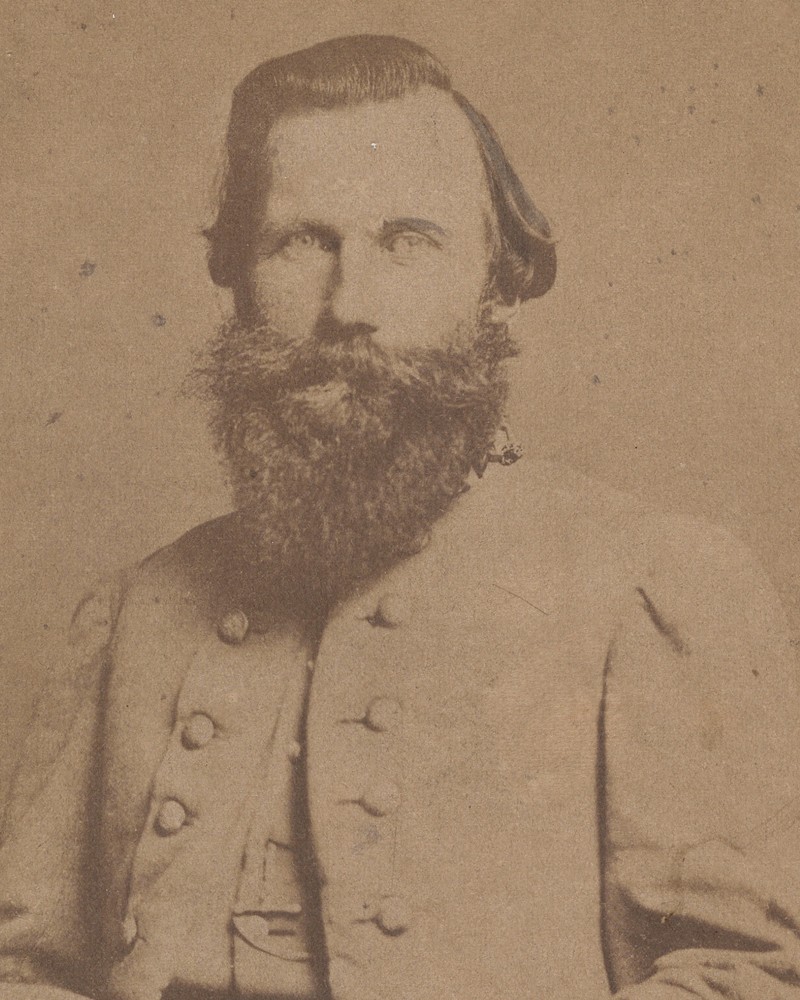
Original photograph
Photograph by George S. Cook, 1863. National Portrait Gallery, Smithsonian.
J.E.B. Stuart
Major General
Cavalry
Cavalry, Army of Northern Virginia
1833–1864 · Mortally wounded at Yellow Tavern
Born at Laurel Hill in Patrick County, Va., and a West Point graduate of 1854, Stuart went from colonel of the 1st Virginia Cavalry to major general by July 1862 and led Lee’s cavalry from then on. He rode around McClellan’s army, fought at First and Second Manassas, Antietam, Fredericksburg, Brandy Station and Gettysburg, and took command of Jackson’s corps at Chancellorsville. He was mortally wounded at Yellow Tavern on May 11, 1864, died in Richmond the next day and is buried in Hollywood Cemetery.
Source: Encyclopedia Virginia
Our namesake →
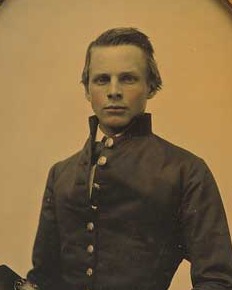
Hand-tinted (period)
Ambrotype by Mathew Brady, 1858, as a West Point cadet. National Portrait Gallery, Smithsonian.
John Pelham
Major (promoted lieutenant colonel posthumously)
Horse artillery
Stuart Horse Artillery
1838–1863 · Mortally wounded at Kelly’s Ford
Born in Benton (now Calhoun) County, Ala., Pelham left West Point weeks before graduation in 1861 and went on to command Stuart’s Horse Artillery. He fought at First Manassas and Antietam, and at Fredericksburg Lee called him “the gallant Pelham.” He was mortally wounded at Kelly’s Ford in March 1863 and died at Culpeper. The Confederate Congress confirmed his promotion after his death. He is buried in City Cemetery, Jacksonville, Ala.
Sources: Encyclopedia of Alabama; National Park Service
Further reading →
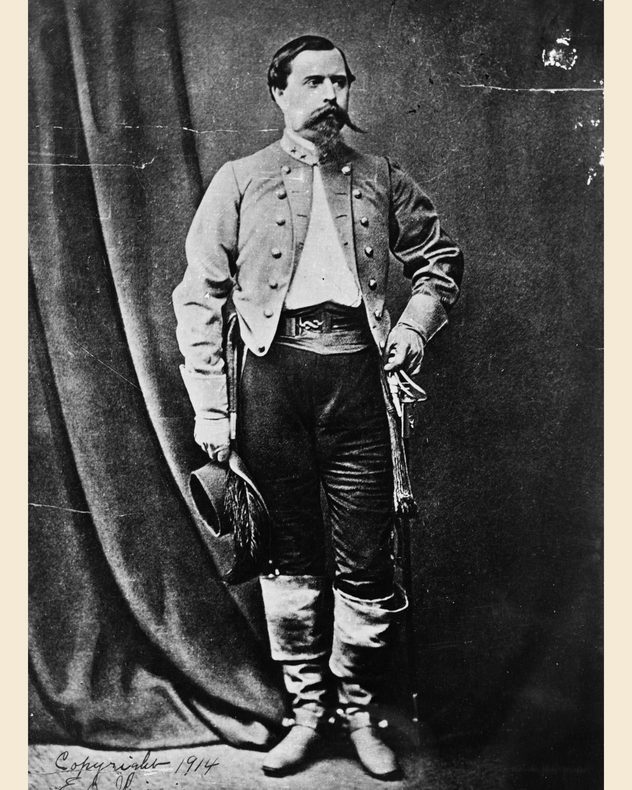
Original photograph
Heros von Borcke, ca. 1864. Photograph; copyright deposit by E. O. Wiggins, 1914. Library of Congress, LC-USZ62-120787.
Heros von Borcke
Lieutenant Colonel
Cavalry staff
Stuart’s cavalry staff, Army of Northern Virginia
1835–1895 · Died in Berlin
Born at Ehrenbreitstein Fortress near Koblenz, Prussia, von Borcke left a lieutenancy in the Prussian army and joined Stuart’s staff as a captain in June 1862. As assistant adjutant and inspector general, often called Stuart’s chief of staff, he served until he was shot in the neck at Middleburg on June 19, 1863. The Confederate Congress formally thanked him in January 1864. He was back with Stuart when Stuart was mortally wounded that May. He returned to Prussia, published his war memoirs in 1866 and died in Berlin in 1895. He is buried at Giesenbrügge, now Giżyn, Poland.
Sources: Memoirs of the Confederate War for Independence (1866); Official Records, Ser. I, Vol. 27, Pt. 2, p. 712 (thanks of Congress); Journal of the Congress of the C.S.A., Vol. 4, p. 388 (lieutenant colonel); Battle of Middleburg historical marker
Further reading →
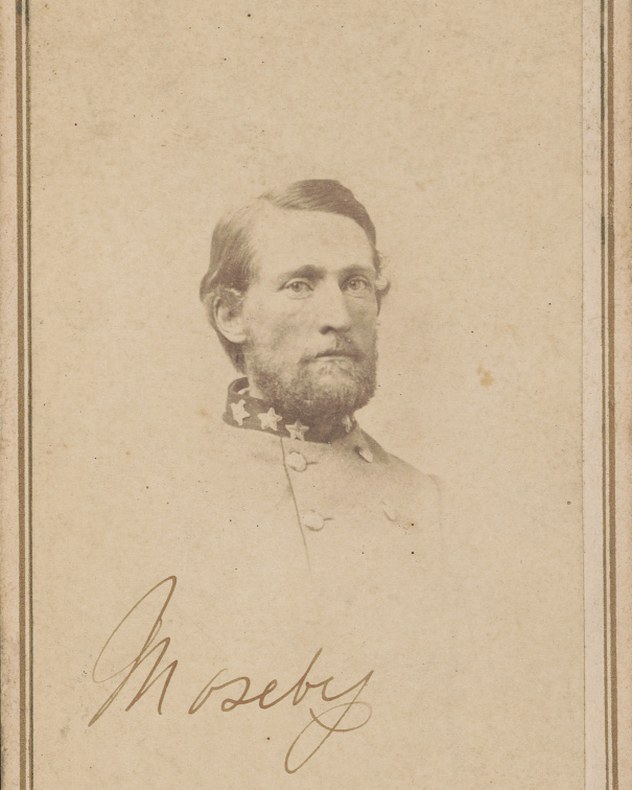
Original photograph
Carte de visite by Vannerson & Jones, Richmond, Va. Library of Congress, LC-DIG-ppmsca-40555.
John Singleton Mosby
Colonel
Cavalry
43rd Battalion, Virginia Cavalry (Mosby’s Rangers)
1833–1916 · Died in Washington
Born in Powhatan County, Va., Mosby was expelled from the University of Virginia and read law in jail. He joined the 1st Virginia Cavalry in 1861 and became one of Stuart’s scouts; his reports helped make the ride around McClellan possible. On March 9, 1863, he captured Union Brig. Gen. Edwin H. Stoughton at Fairfax Court House. That June he formed the 43rd Battalion, whose raids made Loudoun and Fauquier counties “Mosby’s Confederacy.” He disbanded his command on April 21, 1865, rather than surrender it. He died in Washington on May 30, 1916, and is buried in Warrenton.
Sources: Encyclopedia Virginia; Library of Congress (image)
Further reading →
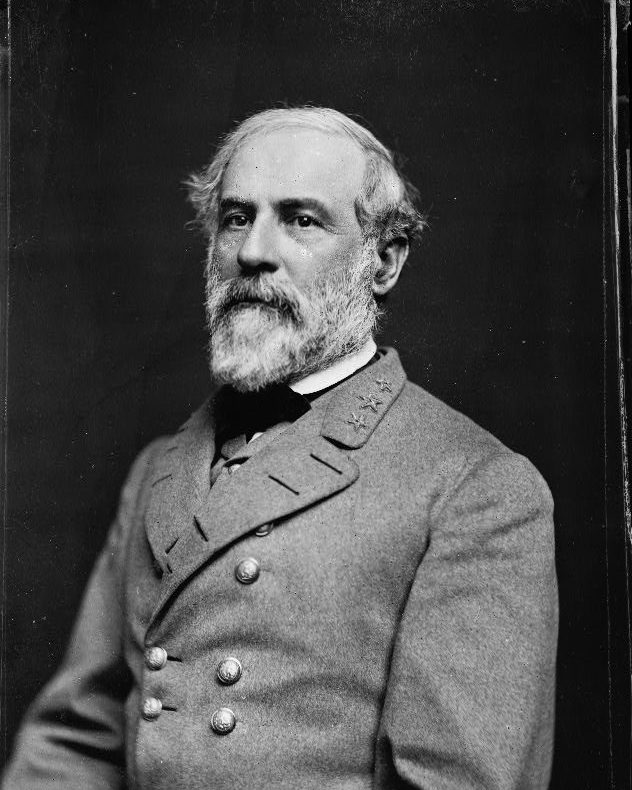
Original photograph
Photograph by Julian Vannerson, March 1864. Library of Congress.
Robert E. Lee
General
Army command
Commanding the Army of Northern Virginia
1807–1870 · Died in Lexington
Born at Stratford Hall in Westmoreland County, Va., Lee finished second in the West Point class of 1829 and resigned from the U.S. Army in April 1861. He took command of the Army of Northern Virginia on June 1, 1862, and became general-in-chief of the Confederate armies in February 1865. He led the army from the Seven Days through Gettysburg, the Overland Campaign and Petersburg, and surrendered at Appomattox on April 9, 1865. He later served as president of Washington College and died in Lexington on October 12, 1870.
Sources: Encyclopedia Virginia; Library of Congress (image)
Further reading →
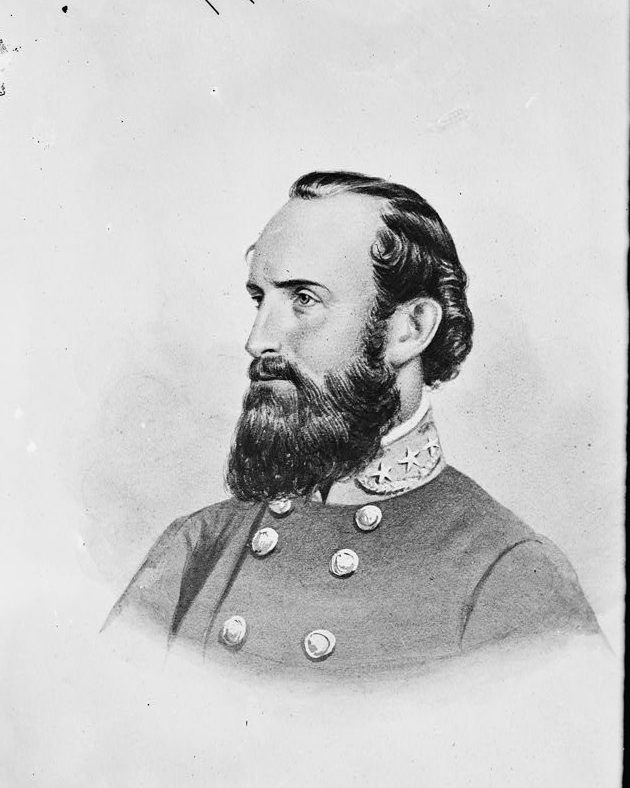
Period engraving
Engraving after a period photograph. Mathew Brady studio negative, Library of Congress.
Thomas J. “Stonewall” Jackson
Lieutenant General
Army command
Second Corps, Army of Northern Virginia
1824–1863 · Mortally wounded at Chancellorsville
Born in Clarksburg, Va. (now W.Va.), Jackson graduated from West Point in 1846, served in the Mexican War and taught at the Virginia Military Institute. He earned the name “Stonewall” at First Manassas, led the 1862 Valley Campaign and fought at Cedar Mountain, Second Manassas, Harpers Ferry, Antietam and Fredericksburg. His own men shot him by mistake during his flank attack at Chancellorsville on May 2, 1863. He died of pneumonia at Guinea Station on May 10 and is buried in Oak Grove Cemetery, Lexington.
Sources: Encyclopedia Virginia; Library of Congress (image)
Further reading →
Engraving
Turner Ashby. Undated engraving; engraver unidentified. Library of Congress, Prints and Photographs Division, LC-USZ61-164.
Turner Ashby
Brigadier General
Cavalry
7th Virginia Cavalry; Jackson’s cavalry, 1862 Valley Campaign
1828–1862 · Killed near Harrisonburg
Born at Rose Bank in Fauquier County, Va., Ashby raised a volunteer cavalry troop, the Mountain Rangers, before the war. He was commissioned lieutenant colonel of the 7th Virginia Cavalry in June 1861, days before his brother Richard was mortally wounded in a Union ambush, and became its colonel in March 1862. He led Jackson’s cavalry through the 1862 Valley Campaign and was promoted to brigadier general that spring. Known as the “Black Knight of the Confederacy,” he was killed in action near Harrisonburg on June 6, 1862. He lies with Richard in Stonewall Cemetery, Winchester.
Sources: Encyclopedia Virginia; National Park Service; Library of Congress (image)
Further reading →
Photograph
Wade Hampton, between 1860 and 1870. Civil war photographs, 1861–1865, Library of Congress, Prints and Photographs Division. LC-DIG-cwpb-07539.
Wade Hampton III
Lieutenant General
Cavalry
Hampton’s Legion; Cavalry, Army of Northern Virginia
1818–1902 · Died in Columbia
In 1861, Hampton raised Hampton’s Legion with infantry, cavalry and artillery and was commissioned its colonel; the legion fought at First Manassas. He later led an infantry brigade in the Peninsula Campaign, was wounded at Seven Pines, and commanded a cavalry brigade under J.E.B. Stuart. In August 1864 he became cavalry commander of the Army of Northern Virginia; Lee sent him to South Carolina to oppose Sherman in January 1865, and he was promoted to lieutenant general the following month.
Sources: South Carolina Encyclopedia; War Department memorandum on Confederate general officers (1908), p. 4; Library of Congress (image)
Further reading →
Original photograph
Major General Fitzhugh Lee, Confederate States Army. Civil War period photograph, U.S. Naval History and Heritage Command, NH 48274.
Fitzhugh Lee
Major General
Cavalry
Cavalry Corps, Army of Northern Virginia
1835–1905 · Died in Washington
Born at Clermont near Alexandria, Va., a nephew of Robert E. Lee, “Fitz” Lee graduated from West Point in 1856 and became lieutenant colonel of the 1st Virginia Cavalry in 1861. Promoted to brigadier general in July 1862 and major general in August 1863, he was wounded at Third Winchester in September 1864 and led the army’s cavalry from February 1865. He evaded the surrender at Appomattox but gave himself up three days later, and was later governor of Virginia.
Sources: Encyclopedia Virginia; National Park Service; Naval History and Heritage Command (image)
Further reading →