
Camp namesake
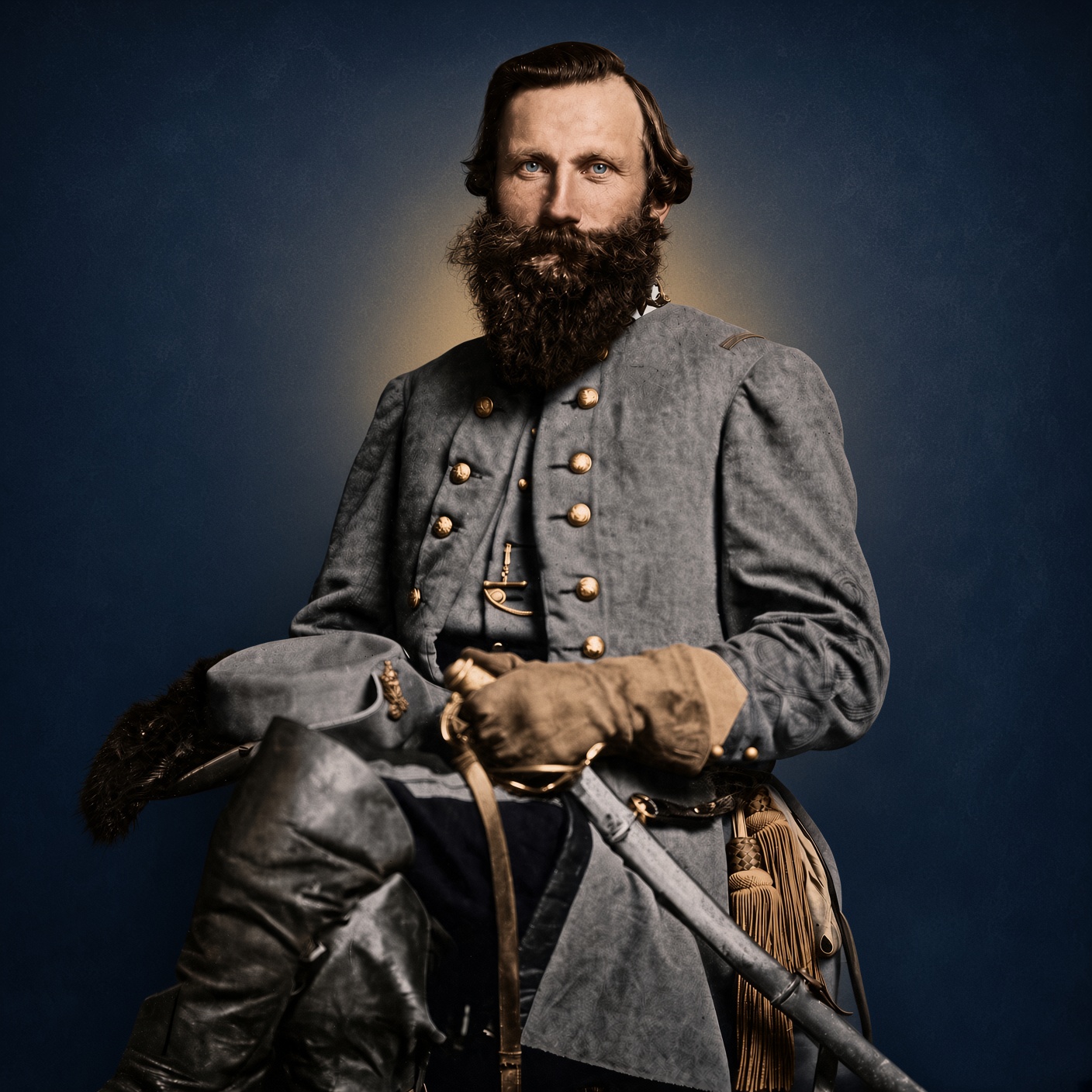
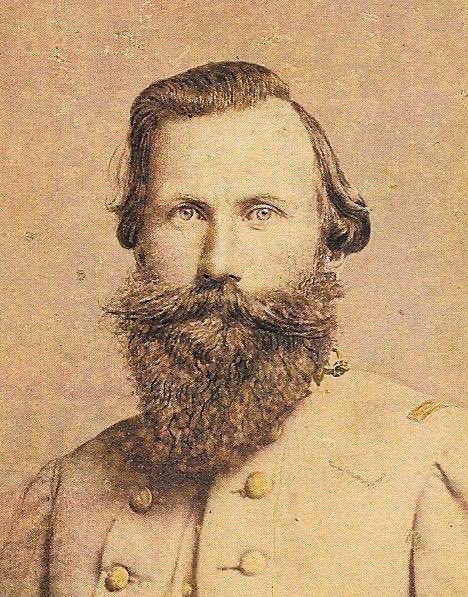
Major General J.E.B. Stuart
The cavalry commander whose last field was here — in Henrico County, on the road to Richmond.
Biography
James Ewell Brown “J.E.B.” Stuart (6 February 1833 – 12 May 1864) was a Virginia cavalry officer known for reconnaissance, hard riding, and a public style that made him one of the most recognizable figures in the Army of Northern Virginia. A graduate of the United States Military Academy at West Point in 1854, he served on the frontier before returning to his native state in 1861.
As commander of the Cavalry Corps he screened Lee’s army, gathered intelligence, and twice rode around Maj. Gen. George B. McClellan’s army on the Peninsula. Those rides were more than theater: they told Lee where the enemy was, and where he was not.
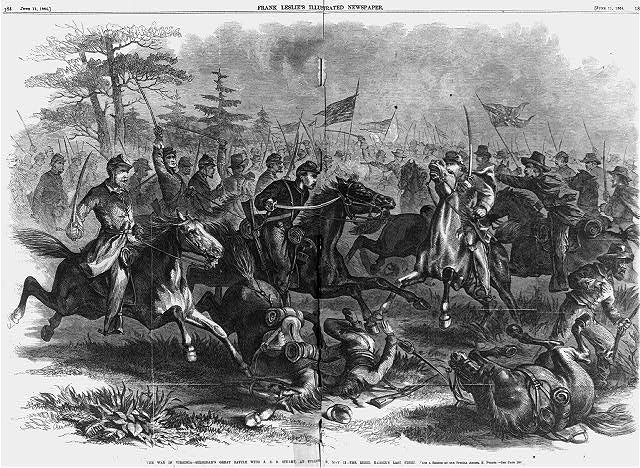
His connection to this camp’s home ground is immediate. On 11 May 1864, during Grant’s Overland Campaign, Stuart placed his outnumbered troopers across Sheridan’s path at Yellow Tavern, a crossroads in Henrico County north of Richmond. While rallying the left of his line on Old Telegraph Road he was mortally wounded. He died the next day in Richmond, and is buried at Hollywood Cemetery.
Camp 1343 takes its name from that service — and from the duty of keeping the ground, the grave, and the record in order.
In his own words
Three sentences he left us
“I would rather die than be whipped.”
“All I ask of fate is that I may receive my death wound in a charge.”
“I am going fast now; I am resigned; God’s will be done.” Last words, 12 May 1864
Yellow Tavern
The field in this county
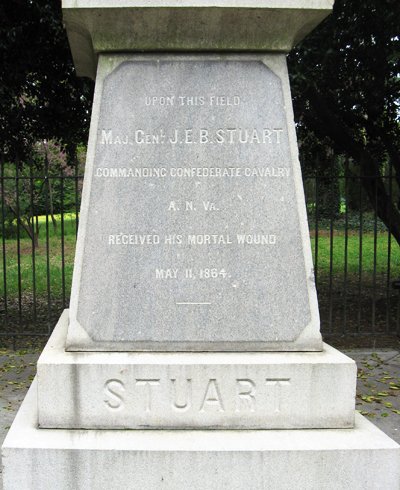
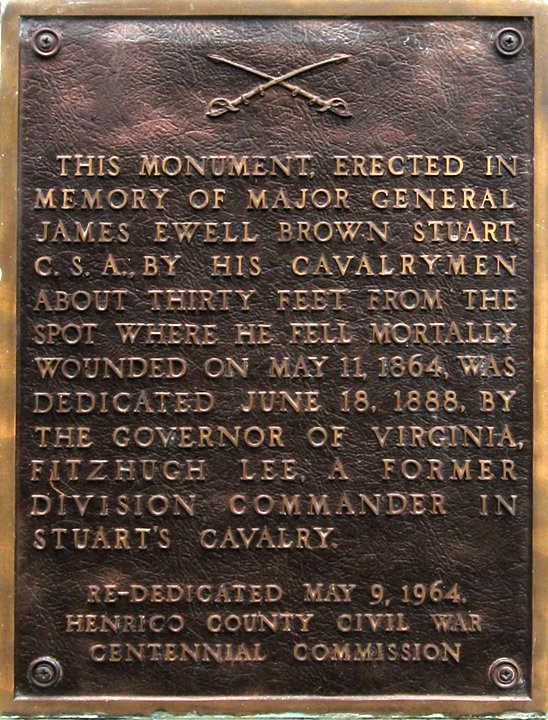
The Stuart monument stands on Telegraph Road in Henrico, near the ground where he was struck on 11 May 1864. The camp keeps a memorial there each May.
Hollywood Cemetery
Richmond — the grave
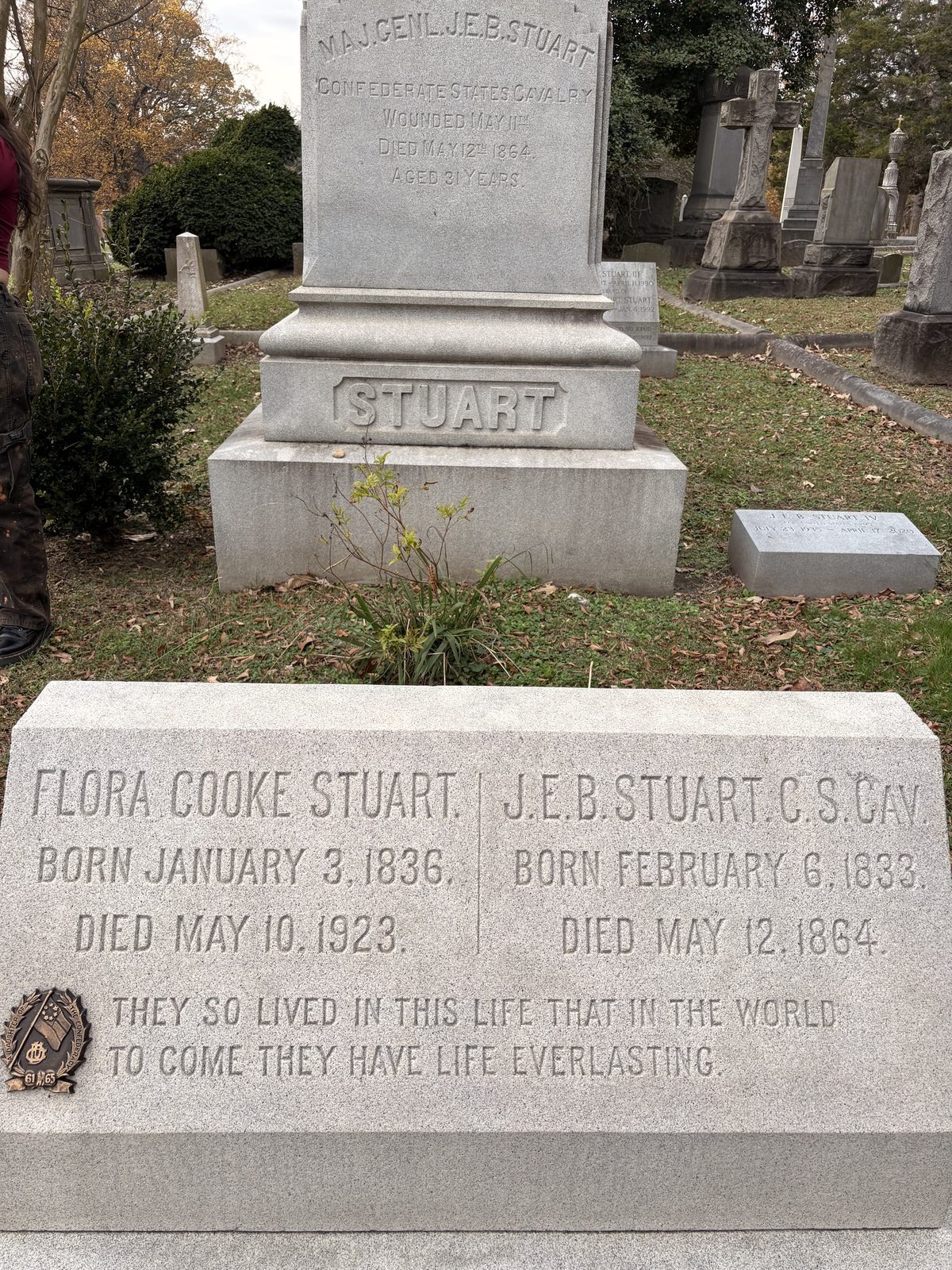
Stuart is buried at Hollywood Cemetery in Richmond, beside Flora Cooke Stuart. The camp’s annual birthday remembrance is kept at this ground.
Documentary photograph
Monument Avenue, Richmond
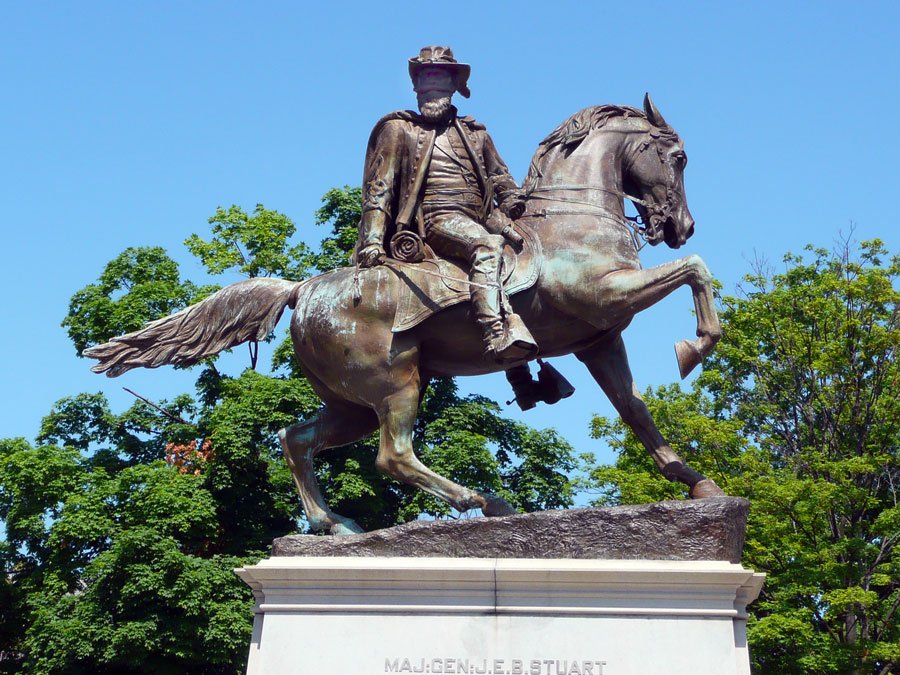
The equestrian statue of Maj. Gen. J.E.B. Stuart formerly stood on Monument Avenue. It is recorded here as a documentary photograph of a public monument — not as camp branding, and not as the hero of this site.